Saturday, 24 February 2018

This app teaches your kids how to save money (because you suck at it)

This app teaches your kids how to save money (because you suck at it)
  • 155
    SHARES
This interview is part of our series of Growth Stories. We interviewed the founders and CEOs of 20 of the fastest growing startups in Europe. We asked them about their companies, their companies’ culture, and their lives, trying to understand how these three factors played a role in the achievement of such impressive growth.
The two most important things in the life of a parent are probably kids and family finance. There’s a startup that combined both those things and created quite a fortunate product.
The startup is called GoHenry, and it’s a British company that provides pocket money solutions for children.
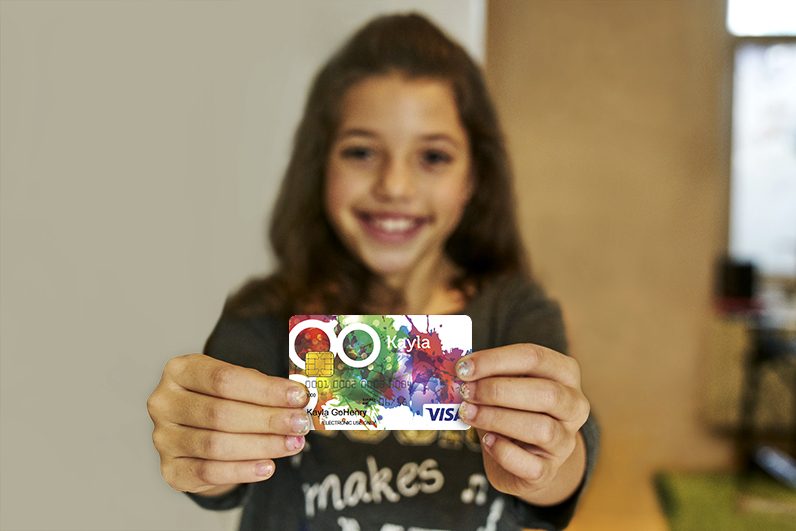
With GoHenry, parents can give their little money-suckers VISA payment cards as soon as they turn six. But this doesn’t mean that the family will go bankrupt before the kids are seven. Parents retain total control over the card. They can even decide where the children are allowed to use it.


This app teaches your kids how to save money (because you suck at it)

This app teaches your kids how to save money (because you suck at it)
  • 155
    SHARES
This interview is part of our series of Growth Stories. We interviewed the founders and CEOs of 20 of the fastest growing startups in Europe. We asked them about their companies, their companies’ culture, and their lives, trying to understand how these three factors played a role in the achievement of such impressive growth.
The two most important things in the life of a parent are probably kids and family finance. There’s a startup that combined both those things and created quite a fortunate product.
The startup is called GoHenry, and it’s a British company that provides pocket money solutions for children.
With GoHenry, parents can give their little money-suckers VISA payment cards as soon as they turn six. But this doesn’t mean that the family will go bankrupt before the kids are seven. Parents retain total control over the card. They can even decide where the children are allowed to use it.

Bank of America admits cryptocurrency is threatening its business model

Cryptocurrency
  • 350
    SHARES
One of the world’s largest financial institutions admitted in its annual report that cryptocurrency is a looming threat to its business model.
According to a report filed with the SEC by Bank of America:
Clients may choose to conduct business with other market participants who engage in business or offer products in areas we deem speculative or risky, such as cryptocurrencies. Increased competition may negatively affect our earnings by creating pressure to lower prices or credit standards on our products and services requiring additional investment to improve the quality and delivery of our technology and/or reducing our market share, or affecting the willingness of clients to do business with us.
Still on the fringes of the mainstream, cryptocurrencies have gained notoriety in recent months — particularly after a strong December that saw Bitcoin reach new heights of almost $20,000 per coin, and the addition of futures contracts on two major exchanges.
But a January “dip” may have led newer investors, or speculators, to ice their wounds in safer markets after prices tumbled over 50 percent.
As Bitcoin and the altcoin market continue to recover, expect the hype cycle to start again and for cryptocurrency to wedge its way, firmly this time, into the lexicon.
Until then it’ll remain a threat, albeit a distant one.

'Snapchat Dysmorphia' Points To A Troubling New Trend In Plastic Surgery

napchat and Instagram filters smooth out our skin, give us fuller lips and even make our eyes look bigger, all of which fall in line with Western society’s current beauty standards. As anyone who scrolls through their social media feed knows, filters ― whether animal-faced, fairy-like or just altered in contrast ― are the norm. 
There has been much discussion about how these apps and filters may be bad for our self-esteem and whether they can lead to issues like body dysmorphic disorder, a body image disorder “characterized by persistent and intrusive preoccupations with an imagined or slight defect in one’s appearance,” according to the Anxiety and Depression Association of America. 
Now, patients are even bringing filtered selfies to their plastic surgeons to illustrate what they’re looking to achieve, according to Dr. Matthew Schulman, a board-certified plastic surgeon based in New York City. One doctor has referred to this phenomenon as “Snapchat Dysmorphia.” 
Some have even argued that Snapchat filters might be making us forget what we actually look like. 
“There’s an issue with losing perspective on what you actually look like, and it’s not something we talk about much,” said Renee Engeln, professor of psychology at Northwestern University, and author of Beauty Sick: How the Cultural Obsession with Appearance Hurts Girls and Women. Before the days of Snapchat and Instagram, Engeln explained, altered photos were typically reserved for celebrities and models in ads or magazines, and we generally knew these images were edited.